A Winter Window, Arranged for the Long Afternoon
Arrange a winter window corner for reading, handwork, or quiet sitting with a clear view, comfortable seat, useful light, and only the materials you need.
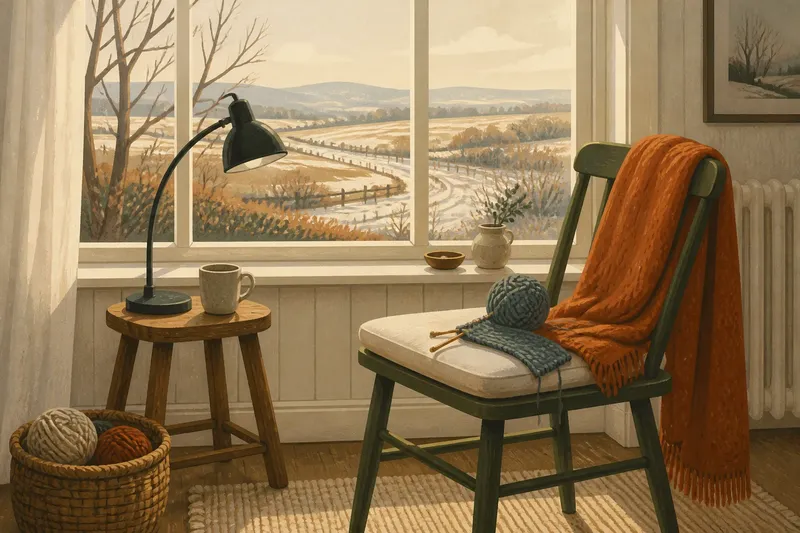
A winter window corner needs a chair that suits its task and a view you can enjoy without shifting around furniture. For a comfortable winter window corner, begin by noticing the draft, glare, and changing light at the hour you plan to sit. Bare hedges, a lane, or weather crossing the fields need no decorative assistance.
Choose the afternoon
Decide what you want to do there: read, make something by hand, write, or sit and watch the weather. A bright window may help with reading, but a steady draft can make it an unappealing place to linger. Sit in the room at the likely time and notice glare, shadows, passing traffic, and where the sun disappears.
Let the intended activity set the arrangement. Reading calls for a reachable book and a lamp; handwork needs room for your hands and a place for the active project. Quiet sitting may need little beyond the chair and a surface for a drink.
Fit the chair
An existing Windsor chair with a cushion, deep upholstered armchair, or sturdy kitchen chair may work, depending on the task. A deep seat can suit a novel. A firmer seat may make it easier to keep your shoulders and hands comfortable during knitting or writing.
Test the chair in position. Check whether you can sit back without pressing against the sill or radiator, rest your feet comfortably, and use the arms without catching your work. A cushion can soften a hard seat, but it should stay in place when you shift. If the chair feels wrong after a short sit, another cushion is unlikely to solve it.
Say you have a narrow oak chair that feels tiring during handwork. You place it by the window with a firm seat pad and a low basket for yarn. If the pad stays put and your elbows have room, the setup suits the task; if you keep shifting to reach the work, you choose another chair before adding accessories.
Preserve the view
Check the window from the seated position. A lamp, tall plant, or stack of books should not force you to lean around it. A slight turn of the chair may ease glare or make the seat feel less exposed to the room.
Notice whether the sill cuts across the view, reflections obscure the glass, or objects crowd the sightline. Keep sill items low enough to see outside. A useful dish or small vase can stay; a row of ornaments can make the window feel more like a shelf.
If privacy matters, consider how the chair looks from outside as well as how the room feels from within. An existing sheer panel, blind, or curtain may help, depending on the window. Adjust it to balance privacy with the view you want to keep.
Place useful light
Winter daylight changes during the afternoon, so do not rely on its brightest moment. For reading or making, position a lamp to light the page or hands without shining into your eyes or reflecting sharply in the glass. A table lamp can work on a nearby surface; a floor lamp may fit where there is no room for a table.
Check the lamp from the chair. If its cord crosses a walking route or catches on the seat, move the lamp or choose another position. Keep the landing surface clear enough for the item you need now. A table crowded with a lamp, drink, books, and supplies is not much of a landing place.
If you mainly watch the weather or talk, the lamp can be secondary. Room lighting may be enough, with a reading lamp available when you need it.
Keep materials in reach
Keep the materials for one likely activity nearby. A book and bookmark need little room; knitting, mending, sketching, or correspondence may need a basket or tray that can be moved aside. Store spare supplies elsewhere so the corner remains ready for use.
- Reading: Check whether the book, bookmark, and reading glasses are within reach; if they are, keep the setup, and if not, move them to the side table or basket.
- Handwork: Check whether the active project and its tools fit in a shallow basket; if they do, use it, and if not, remove spare supplies or choose a larger basket that can still tuck beside the chair.
- Writing: Check whether the notebook has a stable surface and enough room; if it does, keep the writing spot, and if not, move the basket or choose a firmer, better-positioned surface.
- Quiet sitting: Check whether the chair is clear and a drink has a safe place; if both are true, leave the corner spare, and if not, clear the seat or bring over a suitable side surface.
- Lighting: Check whether the lamp lights the task without glare or a cord across the walking route; if it does, keep its position, and if not, move it or use a different lamp placement.
- Floor comfort: Check whether a rug lies flat and stays out of the walking route; if it does, keep it, and if not, remove it or reposition it to avoid a curled edge or trip point.
What might need changing?
What if the window is drafty?
Move the chair away from the cold stream of air while keeping the view. A rug underfoot or throw over the chair may help, but keep fabric clear of radiators and other heat sources.
What if the best chair is bulky?
Keep it if it is comfortable, then position it so it does not crowd the window or interrupt the room. Use a small landing surface rather than adding furniture to make the corner look balanced.
What if the window causes glare?
Turn the chair slightly or move the lamp so the page is lit without a bright reflection in the glass. If glare remains, adjust an existing blind or curtain while preserving as much of the view as practical.
What if floor space is scarce?
Use the chair’s side table, a compact stool, or a basket that tucks beside the seat. Choose one place for materials instead of scattering small objects around the floor.
Make room for winter
A wool throw folded over the chair back is easy to use and put away. A cushion can warm a hard seat if it stays in place. A small rug may soften a cold floor, provided it lies flat and does not obstruct the walking route.
Consider what remains when you leave. Put away completed work and return shared items to their usual homes. A basket of current materials can stay nearby; a pile of unfinished projects is less helpful and can make the window feel occupied even when the chair is empty.
Use what already belongs in the room where it serves a clear purpose: a woven basket for the current project, a wooden stool for a lamp, or a wool blanket for warmth. The objects need not match. They need to work without crowding the seat or view.
Check the arrangement
For a worked example, imagine you plan to knit by a rural window in the late afternoon. You start with a kitchen chair, a firm seat pad, a shallow basket of yarn and needles, and a table lamp on a nearby stool. Sitting in the chair, you find that the basket is reachable and the pad stays put, but the lamp cord crosses the path to the door. You move the lamp to the other side of the stool and sit again; if the cord now stays clear and the light reaches your hands without glare, the setup works for knitting. If the new position still leaves the cord in the path, you move the lamp farther from the doorway or use a different lamp position.
Make changes while seated, one at a time. If the chair catches on a rug when you turn, move or remove the rug. If a book is hard to reach, bring the landing surface closer. Check the arrangement during the hour you expect to use it, when the light and the room’s activity are closer to their usual conditions.
A winter window corner is easier to use when the view, lighting, and materials suit one activity. Search for a winter window corner by its purpose, then make the small adjustment that answers that purpose. At the end of the afternoon, return the project to its basket and leave the chair ready for its next use.