The Hall Settle: From Useful Seat to Country-House Fixture
Explore hall settle history through its changing form and role, and learn how to place an old settle without mistaking visual appeal for structural safety.
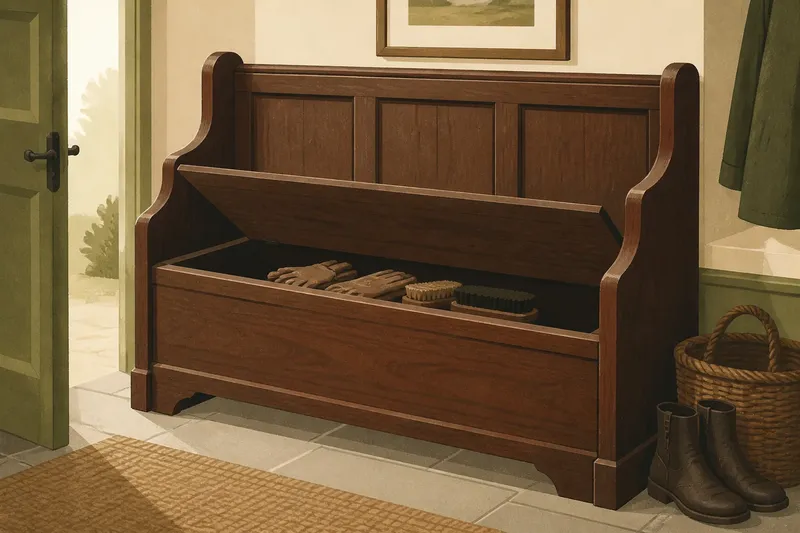
Hall settle history is easiest to read in the furniture itself: a long seat, a back that rises above it, and sides that make the piece feel enclosed. These features suit a place where someone might pause on arrival, but they do not establish when or why any particular settle was made. Treat the history as a way to understand the form, not as a dating guide.
Wall-side seating
A settle is a long seat with a back, often with arms or sides. It is commonly placed against a wall, where its substantial frame can furnish an edge of the room without occupying the center. Some examples have a box beneath a hinged seat; others are open or solid. Storage is an option, not a defining feature.
The form gathers several practical qualities in one object. Its length allows more than one person to sit, while the back and arms distinguish it from a simple bench. A high panel can give a stronger sense of enclosure; a lower or open back leaves the room feeling less crowded.
Those qualities explain why a settle could suit an entrance or a shared room, but they do not prove that every old example began in a hall. Furniture moves, and a piece’s current setting may tell little about its first one.
From entrance to country house
An entrance is a plausible setting for a substantial seat. Someone arriving might need to pause, wait, or change footwear, and a seat near the door could serve those routines. The hall also separates the threshold from more private rooms, so a visitor could sit without being ushered farther into the house.
Settles also appear in descriptions and interiors of shared rooms, where their length and visual weight could suit a kitchen, passage, or gathering space. The shift from useful seat to country-house fixture is best understood as a change in emphasis rather than a tidy historical sequence. A settle might be valued for everyday use in one household and kept chiefly for its presence in another.
Country-house interiors often bring together objects with different origins and uses. A settle’s large back can anchor a wall, while carved panels, shaped arms, or a polished finish can make it appear more formal. Those details affect the impression; without reliable provenance, they should not be treated as proof of a particular date, maker, or original room.
Form and household use
Construction varies. Oak and other hardwoods are common materials for substantial frames, while seats may be plain wood, cushioned, or upholstered. The finish and fabric influence both appearance and care. A loose cushion can soften a wooden seat without changing the underlying furniture; fixed upholstery may require more specialized attention.
A hinged seat adds a practical complication. It needs room to open, and objects stored inside should not obstruct the hinge or press against the lid. A settle without a box has fewer access concerns, though its length and depth still affect how it fits a room.
Say you have a narrow entrance, a settle with a hinged seat, and a short list of items you want near the door: gloves and spare shoe brushes. You place the settle along a wall, open the lid, and check that it clears the door swing and leaves the walking route open. Then you put only those items inside and sit down to see whether the seat remains easy to use. If the lid catches or the route feels pinched, the result is clear: move the settle or choose another storage spot, rather than treating the entrance as a fixed destination.
Why did settles have high backs?
Did a high back block drafts?
A high back can put a barrier between a sitter and a wall or a drafty part of a room. Its effect depends on the room and the settle, so the shape alone does not establish that draft control was the original purpose.
Did every settle include storage?
No. Some settles have a compartment beneath a hinged seat, while others have no box at all. Check the actual construction rather than assuming storage from the furniture’s name.
Could someone sleep on a settle?
A long seat may allow a short rest, but a standard settle is not necessarily designed as a bed. Length, depth, condition, and construction all affect whether lying down is practical.
Where does a settle fit today?
It can suit a hall, kitchen, or living room if the room allows people to use it without blocking doors or walkways. Decide by checking the seat’s intended use, the space it occupies, and access to any hinged lid.
Checking an old settle
A visual inspection can identify concerns, but it cannot establish structural safety. Do not rely on a frame feeling firm under hand pressure, and do not sit on a valuable, fragile, or visibly damaged piece to test it. Loose joints, splits, insect damage, lifted veneer, or a lid that shifts unexpectedly are reasons to stop using it and seek an assessment from a qualified furniture conservator or experienced furniture restorer.
- Look for loose joints or movement at the arms; if present, keep the settle out of use and ask a qualified professional to assess it, otherwise continue with a visual review without treating that as a safety clearance.
- Check for splits, crushed wood, or missing sections around the legs and seat supports; if present, avoid loading the piece and seek professional advice, otherwise note the areas for continued observation.
- Look for insect holes, fresh-looking debris, or damaged wood; if present, do not store the settle near other wooden furniture until a specialist advises you, otherwise proceed with the remaining checks.
- Inspect the underside of a hinged seat for a loose hinge or a lid that drops or shifts; if present, do not use the storage compartment and arrange a repair assessment, otherwise open it only if it moves freely and safely.
- Check whether a lid clears nearby doors and walkways; if it does not, relocate the settle or leave the compartment unused, otherwise confirm that access remains unobstructed.
- Compare the seat’s height and depth with the intended users without forcing a trial on a fragile piece; if the dimensions appear unsuitable, choose another seat or ask a professional how to assess use safely, otherwise consider its location and care needs.
- Look for loose upholstery, unstable trim, or a finish that is flaking; if present, avoid cleaning or repair attempts and consult a conservator, otherwise follow any reliable care guidance for the material.
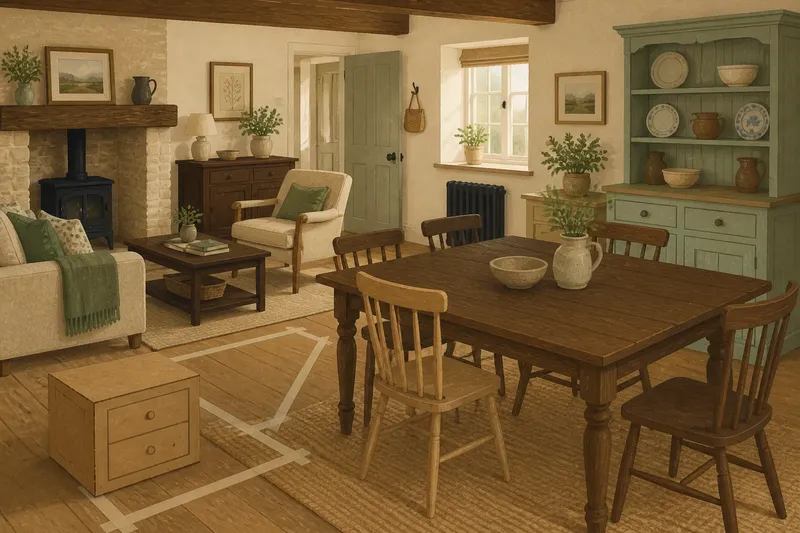
For a sound-looking piece, placement still matters. A high back may dominate a narrow hall, and a settle placed beside an opening can make circulation awkward. Try its location on paper first by marking the outline and the door swing; if the drawing shows an obstruction, choose another wall or room.
Use and display
A settle can change roles without losing its recognizable form. In an entrance it may offer a place to pause; beside a kitchen table it can provide shared seating; in a quieter room it can furnish a long wall. The best position depends less on a presumed historical destination than on the habits of the household and the space available.
When considering hall settle history, keep the distinction between form and provenance in view. The back, arms, length, and storage arrangement can explain how a particular piece might be used, but they cannot settle its age or story on their own. If those questions matter, consult a qualified specialist; for daily use, first make sure the settle can be approached, occupied, and maintained without creating a problem the room did not have before.